
 Oshiete!
 Berita
  Masjid
 Info Kurs
 Media Jepang
Opinion: 'Hate marketing' in Japanese politics a growing concern
MAINICHI
| 9 jam yang lalu
12 0 0
0
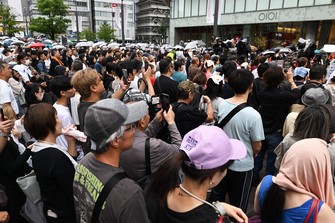
TOKYO -- There is growing concern that certain political parties and politicians are misusing "marketing strategies," and that their discriminatory and xenophobic language appears calculated to gain support without ideological consistency.
Illustrator Ulaken Volvox has been pursuing nondiscriminatory expressions and closely observing political trends from the perspective of a leading illustrator. He argues that these politicians and other actors "exploit people's 'fear,' create a 'market,' designate 'enemies' and convert the 'hatred' toward them into votes, party fees and event participation fees. This can be called 'hate marketing,'" Ulaken explains.
In essence, "hate marketing" is a strategy that leverages emotions of hostility to build market momentum. Ulaken names emerging parties that are rapidly expanding their influence as symbolic examples. They often appropriate advanced marketing techniques originally used in the corporate world.
Their strategies go like this: First they "create a market," highlighting supposed "threats to Japanese traditions posed by globalization" and stoking anxiety, then "target clients" by identifying foreigners or global companies as adversaries, fueling conflict. Thirdly, they employ bold slogans such as "Don't underestimate Japan" or "Japanese First" to advance "advertising strategies" by spreading these messages through social media and YouTube. They then create a sense of "participation" by making supporters feel like they're part of a movement with messages such as "the people are at the center" and present party memberships and donations as a form of personal expression. And finally, they solidify their support base by proclaiming the need to "restore Japan's pride," and make their political party into "a brand" by fueling patriotism.

Ulaken, who studies history, warns that if these methods are left unchecked, they could push the country toward a disastrous future and casualties. "The issues at hand are the same as those seen in Nazi Germany, which scapegoated Jews during periods of economic unrest, created a brand out of ethnic pride and spread propaganda, and also militarist-era Japan, which justified war with the 'Demon American and British' slogan," Ukaken says. These parallels are likely no exaggeration.
'Narrative' over truth
These tactics are also called the misuse of "narrative marketing." While stories typically present events objectively and chronologically, narratives are said to give prominence to the storyteller's emotions, interpretations and lived experience. Narrative marketing refers to a strategy that centers on users' experiences and emotions to elicit empathy from others, ultimately helping to attract fans or customers.
In recent years, with the rise of social media giving word-of-mouth greater influence and with consumers becoming increasingly conscious about what role they can play in society, narrative marketing has attracted attention as an effective promotional method for companies offering products or services.
So how will it work when it's appropriated for political ends? Such politicians will make statements like, "The enemies, namely foreigners from this and that country, are destroying Japan and trying to take over," or "We are fighting to protect our beloved country despite constant interference. Those who criticize us are all on the side of vested interests." These simple and grand narratives, often wrapped in bold and exclusionary language, bypass logical debate and speak directly to emotion. As they circulate on social media, they gather credibility, empowering individuals with the sense that they themselves are heroes in a struggle to transform society. Being factually incorrect will not attract attention.
In the United States, for example, some supporters of President Donald Trump embrace a narrative in which a "deep state" of pedophiles -- supposedly including Democratic leaders -- controls global affairs, with Trump cast as the savior resisting this power. In Hyogo Prefecture, false narratives spread on social media portraying Gov. Motohiko Saito, accused of power harassment, as a victim targeted by shadowy interests and the mass media because he challenged port-related vested interests. While these claims may be dismissed as conspiracy theories, the boundaries have become increasingly blurred; narratives of this kind now permeate today's political discourse.
Harshly condemning or belittling people who are drawn to these narratives as uneducated may not be effective. The biggest problem lies with those who skillfully package hatred and falsehoods as legitimate messages to manipulate public opinion.
(Japanese original by Yuki Machino, Expert Writer, Business News Department)
komentar
Jadi yg pertama suka

Belum Jadi Warga?
Daftar yuk!