
 Oshiete!
 Berita
  Masjid
 Info Kurs
 Media Jepang
Top execs at Japan convenience stores stress foreign workers' role as gov't eyes clampdown
MAINICHI
| 6 jam yang lalu
3 0 0
0
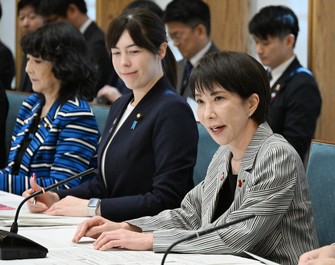
TOKYO -- Top executives at major convenience store chains in Japan have spoken out on the importance of foreign workers in the wake of moves by the administration of Prime Minister Sanae Takaichi to tighten rules relating to foreigners in the country.
In 2025, the number of foreign employees working for convenience store operators Seven-Eleven Japan Co., Lawson Inc. and FamilyMart Co. reached 110,000, making them an indispensable part of the companies' workforces.
Many of the foreign employees working at convenience stores are international students. The student status of residence does not allow work in principle, but if they apply to the Immigration Services Agency for permission to engage in activity other than that allowed under their status of residence, they can work up to 28 hours per week.
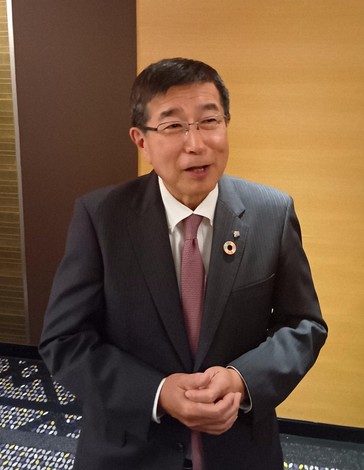
"We certainly do not see them as cheap labor, but want them to learn in Japan through work, including their studies," said Seven & i Holdings Co. Executive Chair Junro Ito.
Regarding current rules on working hours, Ito expressed understanding, saying, "Rather than letting work interfere with their studies, having the current limit on working hours is OK," but added, "It would be scary for the situation to turn into a form of exclusionism. It's necessary to protect those who are working without any problems."
There have been cases where foreign workers have obtained the necessary status of residence and started operating stores, and Ito says he has heard enthusiastic comments such as, "If Seven-Eleven opens in my home country someday, I want to be the owner of the first one."
In a message to the Japanese government, Ito commented, "Excluding such people is no good. I would like them to consider how Japanese society can coexist with foreigners."
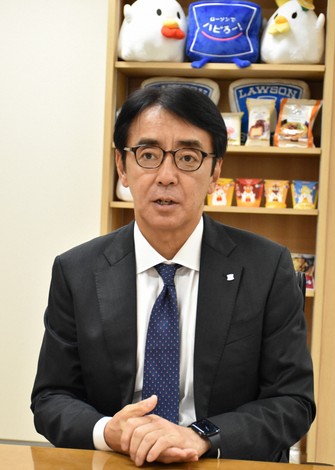
Lawson President Sadanobu Takemasu, meanwhile, expressed a sense of crisis about the industry's outlook, stating, "In the future, there will be a global labor shortage, and it will be an age when workers ponder, 'Which country shall I work in?' If they don't choose this country, it will become one where a convenient lifestyle is difficult (because the conveniences store business won't be sustainable)."
The convenience store industry has long faced a serious labor shortage and has been working to streamline operations by introducing self-checkout registers and using artificial intelligence (AI) to place orders and perform other tasks.
Takemasu stated, "We will make proper use of AI, digital technology and robotics to boost productivity. While preparing a work environment that foreigners will choose, we want to raise productivity." The company aims to tap advanced technology and foreign labor. FamilyMart President Kensuke Hosomi noted the government's stance of rushing to tighten regulations on foreigners, cautioning, "General theory should be separated from individual cases in discussions. It's not good to keep moving in the direction of continuing to impose restrictions excessively."

Noting that the convenience store industry is not covered by the specified skilled worker system, which accepts foreign workers with certain expertise or skills, Hosomi stated, "It is extremely important to resolve the shortage of workers, including by adding the convenience story category of retailing to the system."
The number of foreign part-time workers at convenience stores has been increasing each year. According to the three companies, in 2025 Seven-Eleven employed about 52,000 foreign workers, Lawson about 31,000 and FamilyMart about 27,000.
The three executives spoke to reporters on Jan. 6 at a New Year reception hosted in Tokyo by the Japan Business Federation (Keidanren) and two other business organizations.
(Japanese original by Kazuki Sakuma and Reina Kamoda, Tokyo Business News Department)
komentar
Jadi yg pertama suka

Belum Jadi Warga?
Daftar yuk!