
 Oshiete!
 Berita
  Masjid
 Info Kurs
 Media Jepang
Dollar hits upper 159 yen amid Middle East concern, highest since July 2024
MAINICHI
| Maret 13, 2026
18 0 0
0
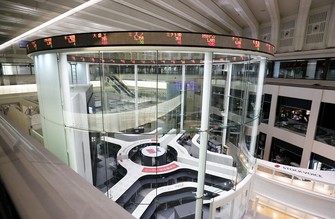
TOKYO (Kyodo) -- The U.S. dollar briefly rose into the upper 159 yen range on Friday, its highest level since July 2024, as fears heightened that the crisis in the Middle East could be prolonged and markets largely shrugged off a warning by Japan about the yen's fall.
Tokyo stocks fell, with the key Nikkei index briefly losing over 2 percent in the morning, pressured by concern over an economic slowdown fueled by inflation as crude oil prices surged.
The dollar hit 159.68 yen in the afternoon, even as Finance Minister Satsuki Katayama said earlier in the day that the government is ready to implement all possible steps on foreign exchange at any time and under any conditions.
Takuya Kanda, senior researcher at the Gaitame.com Research Institute, said caution about a possible yen-buying intervention temporarily receded, noting, Katayama's comments "appeared more subdued than before, fueling speculation that Japanese authorities stepping into the market will be difficult."
In December, Katayama said that Japan has a "free hand" in dealing with the yen's sharp depreciation.
The dollar was being bought as a safe-haven asset, while the yen was weighed down by speculation that rising crude oil prices could hurt Japan's trade balance, dealers said.
At 5 p.m., the dollar was trading at 159.42-44 yen compared with 159.31-41 yen in New York and 158.78-81 yen in Tokyo at 5 p.m. Thursday.
The euro changed hands at $1.1457-1459 and 182.65-69 yen against $1.1505-1515 and 183.38-48 yen in New York and $1.1551-1552 and 183.43-47 yen in Tokyo late Thursday afternoon.
Stocks were sold on growing worries about the Middle East conflict after Iran's new supreme leader Mojtaba Khamenei said Thursday, in his first statement, that the Islamic Republic will continue attacks on U.S. bases in neighboring countries and maintain the closure of the Strait of Hormuz, a key oil shipping channel.
Export-oriented shares, which are typically lifted by a weaker yen as it boosts their overseas profits when repatriated, dropped widely as concerns persist that difficulties in procuring crude oil and petroleum products would weigh on the economy and their earnings, brokers said.
However, buybacks supported the market, helping shares trim some losses after the benchmark Nikkei slid more than 1,100 points earlier in the day.
Masahiro Yamaguchi, head of investment research at SMBC Trust Bank, said, "If the market fully factors in (the likelihood of) the conflict being prolonged, the Nikkei could fall much further, potentially slipping below the 50,000 level."
With the market remaining volatile, "investors are maintaining a buy-the-dip strategy, believing that corporate earnings will not be significantly affected at this stage" as long as the situations do not worsen, he added.
The 225-issue Nikkei Stock Average ended down 633.35 points, or 1.16 percent, from Thursday at 53,819.61. The broader Topix index finished 20.82 points, or 0.57 percent, lower at 3,629.03.
On the top-tier Prime Market, the main decliners were transportation equipment, air transportation and rubber product issues.
The yield on the benchmark 10-year Japanese government bond ended up 0.060 percentage point from Thursday's close, at 2.240 percent.
komentar
Jadi yg pertama suka

Belum Jadi Warga?
Daftar yuk!