
 Oshiete!
 Berita
  Masjid
 Info Kurs
 Media Jepang
Japan PM vows to curb debt issuance as gov't eyes extra budget
MAINICHI
| Kemarin, 18:47
5 0 0
0
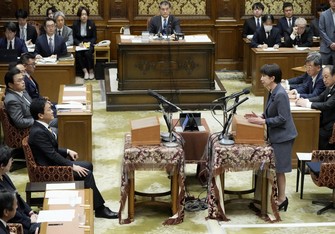
TOKYO (Kyodo) -- Japanese Prime Minister Sanae Takaichi said Wednesday she wants to implement a freeze on the country's consumption tax on food products "as soon as possible," despite concerns over the nation's fiscal health amid the ongoing Middle East crisis.
During a one-on-one parliamentary debate with opposition party leaders, Takaichi also said the government will do its utmost to limit debt issuance to support the public, as her government plans to draft a supplementary budget amid concerns the crisis could have a prolonged economic impact.
Her comments come amid rising Japanese government bond yields, partly reflecting market expectations of accelerating inflation in resource-scarce Japan and its worsening fiscal health.
Questions were led for the first time by Democratic Party for the People head Yuichiro Tamaki, as his party holds the most seats in parliament following the Centrist Reform Alliance's defeat in February's election and uncertainty over a merger between its two founding parties in the House of Councillors.
The first half largely focused on Takaichi's decision Monday to tell ruling parties she had ordered a review into formulating a supplementary budget, just over a month after Japan enacted a record 122.31 trillion yen ($769 billion) fiscal 2026 budget, and a shift from her recent comments that it was not required at present.
On the timing of the consumption tax freeze, Takaichi indicated she wants to move ahead with the policy "as soon as possible" once a cross-party national council on the issue compiles its interim report this summer.
The freeze is becoming increasingly controversial, with opposition parties appearing to have watered down support for the policy amid concerns over its feasibility. Last week, the Organization for Economic Cooperation and Development described it as "untargeted and costly" and recommended that the tax be raised gradually.
Takaichi also said she "seriously reflects" on proposals from Tamaki on whether the government should consider an off-ramp from its subsidies to keep gasoline prices below 170 yen per liter at the pump. The policy, restarted in mid-March, is expected to use up its earmarked 1 trillion yen by the end of June.
On diplomacy, Takaichi said she "strongly welcomes" last week's visit by U.S. President Donald Trump to China because communication between the two countries can help maintain regional peace.
With relations between Japan and China under strain since Takaichi's parliamentary remarks in November suggesting Japan could deploy its defense forces in the event of a conflict over Taiwan, she said she is "open" to dialogue with China and sees a need for a calm approach.
Reflecting the fragmented state of Japan's opposition since the ruling Liberal Democratic Party's landslide victory in the House of Representatives election, Takaichi had brief exchanges with leaders from six parties during the 45-minute session.
komentar
Jadi yg pertama suka

Belum Jadi Warga?
Daftar yuk!