
 Oshiete!
 Berita
  Masjid
 Info Kurs
 Media Jepang
Japan's sticker-swapping craze returns, has parents combing shops for most popular items
MAINICHI
| Mei 30, 2026
18 0 0
0
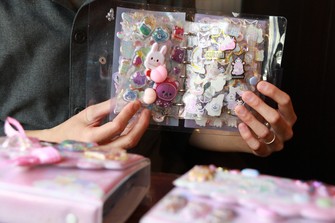
TOKYO -- Sticker swapping, a playground craze among children in the 2000s, has returned as a new boom known as "shiru-katsu." Some parents are now making rounds of multiple stores to check stock as they try to buy popular stickers for their children.
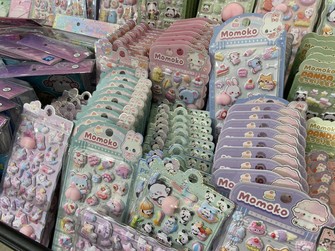
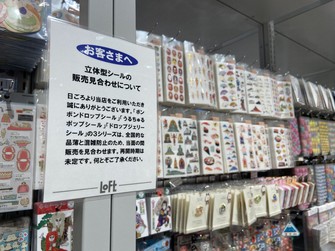
The popularity of sticker trading has been rising especially for three-dimensional stickers such as "Bonbon Drop Seal" and "Uruchuru Pop Seal" stickers. Nao Yamasaki, 29, a designer at Q-Lia, an Osaka-based stationery maker that produces the Bonbon Drop series, told the Mainichi Shimbun, "I never imagined they would become this popular."
For Kota Takayasu, 36, a self-employed resident of Tokyo, the craze means stopping by several nearby stationery shops and supermarkets every morning to see whether popular stickers have arrived for his two daughters, one in elementary school and one in kindergarten. "You can't get them no matter where you go, so I have to visit several stores right when they open," he said.
When the boom began last year, Takayasu stayed on the sidelines. But after his daughter kept receiving stickers from friends without having any of her own to give back, he started buying them himself and prepared a sticker book in January. By the time his daughters had become hooked on collecting stickers, he realized the ones they wanted had disappeared from both online and brick-and-mortar stores.
Among children, the more popular or rare a sticker is, the higher its value becomes, and when they are traded, people say it has a "high rate." Takayasu said, "It feels almost like a game when you unexpectedly come across a sticker you wanted, so I can understand why parents hunting for stickers get absorbed in it too." Before he knew it, both parent and children were deep in the sticker boom.
Nifty Corp., which runs the children's website Nifty Kids, conducted a survey on stickers among elementary and junior high school students from last December to January. The share who said they were "hooked" on collecting stickers was 77.5% among elementary school students and 47.8% among junior high students. Girls appear to be the main drivers of sticker swapping, but at the same time there has also been a move by parents and women in their 20s and 30s, who remember the popularity of stickers in the 2000s, to buy them out of nostalgia.
According to Yamasaki, development of Bonbon Drop stickers began with the idea of creating stickers that were three-dimensional and translucent, like decorations used to adorn smartphone cases and other items. The target customers were girls from preschool age to the lower elementary grades. Yamasaki herself experienced the sticker book boom of the 2000s, but she feels the difference between the crazes then and now lies in how broad the appeal has become. "I'm very surprised that not only children but people of all ages and genders are buying them," she said.
Total shipments had exceeded 21 million stickers as of the end of February. The company boosted production and shipped 2 million stickers in December last year alone, but shortages continue.
At the same time, counterfeit products and resale listings are appearing one after another. On the flea market app Mercari, stickers that would normally cost about 500 yen (about $3.10) a sheet were being resold at high prices, including one listing offering 300 stickers together for about 350,000 yen (approx. $2,200). Such resale activity may also be worsening the shortage.
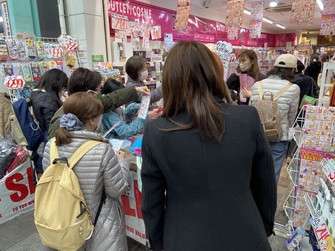
Seiichi Kurakake, head of the president's office at Q-Lia, said of the boom, "For children of the digital generation, I think the analog nature of physically picking up stickers and trading them also felt fresh." As for counterfeits and resales, he said, "We will continue working with the police on anti-counterfeit measures and on steps against bulk buying, such as lottery sales."
With the boom spreading not only among children but to adults as well, its social impact appears to be growing.
(Japanese original by Moe Yamamoto, Digital News Group)
komentar
Jadi yg pertama suka

Belum Jadi Warga?
Daftar yuk!