
 Oshiete!
 Berita
  Masjid
 Info Kurs
 Media Jepang
Reading manga in print improves memory recall time vs. digital versions: Japan study
MAINICHI
| 13 jam yang lalu
2 0 0
0
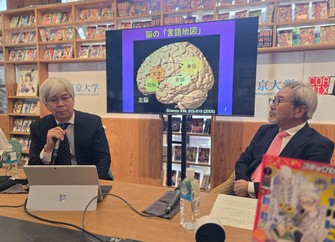
TOKYO -- Reading manga in print improves comprehension and reduces unnecessary brain activity compared to reading on a tablet, a University of Tokyo study has found.
In the study, conducted by researchers including professor Kuniyoshi Sakai, whose specialties include the neuroscience of language, participants were asked about the content after reading a manga. It found they took over 10% longer on average to answer complex questions if they had read the manga on a tablet. The results were published June 3 in the U.S. scientific journal PLOS One.
The study was conducted in collaboration with manga publisher Coamix Inc., based in Musashino, Tokyo, targeting 25 University of Tokyo students between December 2023 and September 2024. Participants read the first half of an unfamiliar manga either in print or on a tablet. They then read the second half using goggles inside an MRI machine and answered questions about the content. Using MRI scans, researchers measured and compared the time participants took to answer, their accuracy rates and their brain activity during reading and while formulating answers.
The manga used depicted the same events from the perspectives of a man and a woman in a couple, a structure known as a "zapping story." The questions included simple ones that could be answered from a single character's perspective, and more complex ones that required understanding both perspectives, with four answer choices for each.

The results showed no difference in the time taken to answer simple questions, but for complex questions, participants who read on a tablet took more than 10% longer on average to answer. There was no difference in accuracy between the print and tablet groups.
When participants read the first half of the story on paper, they tended to comprehend the latter part without heavily engaging the left hemisphere of the brain, which controls language processing. For simple questions, those who read on tablets activated both the left hemisphere and right hemisphere to supplement processing, while those who read on paper were able to answer the questions through activation of the left hemisphere alone. Based on this, the team concluded that reading printed works allows for smoother comprehension and reduces excess brain activity.
Professor Sakai noted, "With paper books, it takes about one second to turn the page, and this appears to provide time to process the content. There are also tactile clues, such as knowing where you are in the story based on the thickness of the book, which may make memory retention easier compared to tablets, where the screen changes instantly when you tap it."
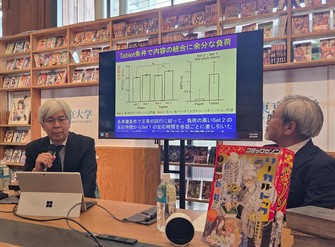
He added that since manga has an abundance of visual information and it is easy to understand the characters' emotions, differences in brain activity tend to be emphasized, but similar trends could be expected with text-only materials.
Lessons using tablet computers have become common in education in Japan, and the Diet is now deliberating legal revisions to introduce digital textbooks. But Sakai warned, "Even in experiments over just a few hours, we saw differences between print and digital. Over the long term, the impact on the brain could be quite substantial. It's important to understand content naturally with print books and to ensure students have enough time to think for themselves."
(Japanese original by Asako Takeuchi, Tokyo City News Department)
komentar
Jadi yg pertama suka

Belum Jadi Warga?
Daftar yuk!