
 Oshiete!
 Berita
  Masjid
 Info Kurs
 Media Jepang
Back stroking calms human infants and young mice, Japanese study finds
MAINICHI
| Juli 16, 2026
38 0 0
0
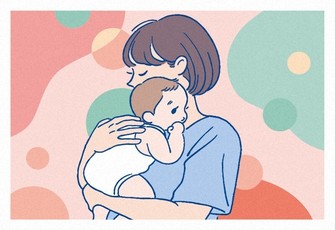
TOKYO -- A Japanese research team made of members including from Toho University found that stroking the backs of human infants, toddlers and pre-weaning mice reduced their spontaneous movements and had a calming effect.
In mouse experiments, continued stroking lowered heart rates, encouraged the onset of sleep and eased stress responses. The results support the importance of physical contact with caregivers during infancy.
Physical contact with caregivers during infancy is an important experience that supports emotional and physical development. But it had not been well understood where on the body stroking is most likely to calm children or what mechanisms produce the effect.
The team conducted an experiment involving 15 mother-child pairs with children aged 0 to 2. The infants and toddlers wore small electrocardiogram sensors, and videos were taken to record movement across the whole body. The mothers were asked to stroke one area at a time -- the back of the head, the back and the abdomen -- for one minute each.
The results showed that stroking the back greatly reduced movement in the head and lower body, while stroking the back of the head or the abdomen did not. Stroking the back of the head increased heart rates and raised the level of wakefulness, but stroking the back did not produce an increase in heart rates.
The team also examined whether the same changes occurred in young mice. Following the pattern of maternal care in which mothers lick the whole body of their young, researchers stroked the backs of young mice with a brush for three minutes. As a result, muscle activity declined and the mice became calmer, while their heart rates also fell. Low-frequency brain wave components increased, encouraging the onset of sleep. Even when the young mice were isolated, continued stroking of their backs suppressed an increase in corticosterone, a type of stress hormone.
In contrast, hand-reared young mice that had little contact with their mothers early in life showed no decline in movement or heart rate, no encouragement of sleep onset and no easing of stress when their backs were stroked.
The team also identified a gene involved in the mechanism. When researchers analyzed the hypothalamus, a region of the brain related to sleep and stress, they found that the expression of one particular gene had sharply declined. When they performed an operation to suppress expression of this gene in normally reared mice, the calming response disappeared, as it had in the hand-reared mice.
Sachine Yoshida, a lecturer in developmental neuroscience at Toho University who conducted the study, said, "The findings have shown that the stimulus of stroking the back calms offspring, and that behind this is a mechanism nurtured by the experience of contact with caregivers early after birth. It is expected to lead to proposals for child-rearing and child care techniques based on scientific evidence, and to understanding and support for children with tactile hypersensitivity, anxiety and other issues."
The research findings were published in the academic journal Communications Biology dated July 3.
(Japanese original by Toshiyasu Kawachi, Lifestyle, Science & Environment News Department)
komentar
Jadi yg pertama suka

Belum Jadi Warga?
Daftar yuk!