
 Oshiete!
 Berita
  Masjid
 Info Kurs
 Media Jepang
Yoroku: Are Japanese people today being left out of Imperial succession debate?
MAINICHI
| Juli 17, 2026
19 0 0
0
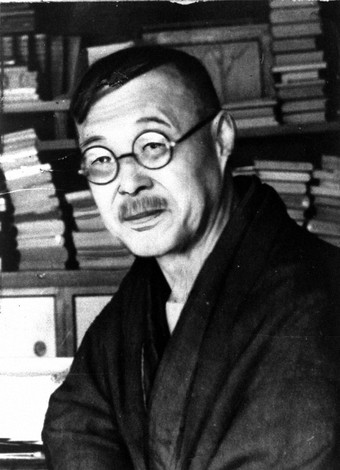
It was in 1933, the year Japan withdrew from the League of Nations, that historian Sokichi Tsuda publicly criticized the nationalism then on the rise in the country.
"They refer to everything the Japanese people of the past possessed as 'Japanese thought,' while rejecting ideas grounded in the lives of Japanese people today," he said, adding, "There is no way a self-satisfied Japanese thought belonging only to Japanese people, unrelated to the currents of thought in the world, can exist."
Today, that would be a perfectly reasonable assertion, but seven years later, Tsuda was persecuted for his historical research.
Many of the accounts in the "Kojiki" and the "Nihon Shoki" -- ancient accounts of the origins of Japan and the Imperial Family -- were creations of later generations. Tsuda's empirical research, which reached the aforementioned conclusions, was denounced as "an affront to the dignity of the Imperial Household" and he was indicted. It was the Imperial year 2,600 -- counted from the accession of Emperor Jimmu, whose existence Tsuda did not acknowledge.
A bill to revise the Imperial House Law is being deliberated in the House of Councillors and is expected to be passed. The phrase "Imperial Household tradition that has continued for more than 2,600 years" seems to have become the rallying cry of conservative factions within the ruling Liberal Democratic Party (LDP) in support of male-line male Imperial succession. There is something unsettling about the repeated statements in the Diet that are not grounded in historical fact.
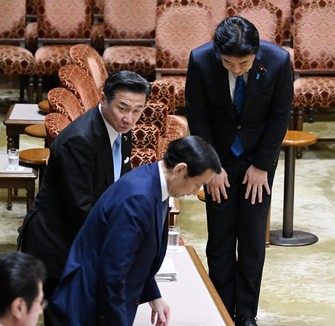
At an LDP convention in April, Prime Minister Sanae Takaichi described male-line succession since Jimmu as a "historical fact," and Finance Minister Satsuki Katayama used the phrase "Imperial year 2,686" at the opening ceremony of the year's first stock trading session. Surely the "policies that split national opinion in two" that the prime minister aims to pursue do not go so far as to include the revival of the Imperial calendar.
"In the modern age, when the people themselves should preside over the whole state, the Imperial Household is the people's Imperial Household, and it is the people who will make 'our emperor' beautiful or fail to do so." These are the words of Tsuda, who ardently defended the postwar system of the emperor as a symbol. Diet deliberations related to Imperial succession have been rushed. Are they not missing the perspective of "Japanese people today"? Doubts continue to grow.
("Yoroku" is a front-page column in the Mainichi Shimbun.)
komentar
Jadi yg pertama suka

Belum Jadi Warga?
Daftar yuk!