
 Oshiete!
 Berita
  Masjid
 Info Kurs
 Media Jepang
Editorial: Full-scale relief for victims needed after order to dissolve Unification Church
MAINICHI
| 10 jam yang lalu
10 0 0
0
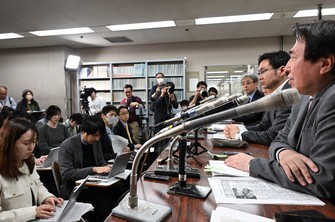
The Tokyo High Court has issued an order to dissolve the Unification Church, upholding a March 2025 decision by the Tokyo District Court and dismissing an immediate appeal by the group.
Japan must move to fully identify the religious group's assets and guarantee relief for victims of its "spiritual sales" and for those who made massive donations.
With the high court's ruling, the dissolution order took effect and liquidation procedures have begun. The group, formally known as the Family Federation for World Peace and Unification, plans to appeal to the Supreme Court, but unless the decision is overturned, the liquidation process will not stop.
Even after the Unification Church is dissolved, its religious activities can continue. But the court decision is grave in that it deprives the group of its religious corporation status. Facilities used for religious purposes will be subject to liquidation, and the group will lose tax benefits, undermining its operational foundation.
The high court pointed out that the group set donation targets that could not be achieved by ordinary means and had followers solicit donations.
National support needed for liquidation
The group used malicious tactics to collect donations, stoking the anxieties of people with serious worries by telling them they had "ancestral karma." The damage extended over a long period, with the amount cited by the Tokyo District Court alone exceeding 20 billion yen (about $127.34 million).
The Unification Church formed a committee to compensate victims last autumn, but the high court deemed its response insufficient, concluding that it saw "no means to prevent illegal acts other than a dissolution order."
With past dissolution orders, such as the one imposed on the AUM Shinrikyo cult, leaders faced criminal charges, but this time the reason was civil wrongdoing. The ruling will not affect religious corporations that follow the law and conduct ordinary activities.
The high court's decision, carefully identifying the church's actual situation and ordering the dissolution considering the immense harm caused, is appropriate.
From here on a lawyer appointed by the court as a liquidator will take over the process. The liquidator will scrutinize the group's deposits, real estate and other assets, and compensate those who report damage. The group has fiercely resisted the dissolution request, so liquidation procedures are expected to face difficulties.
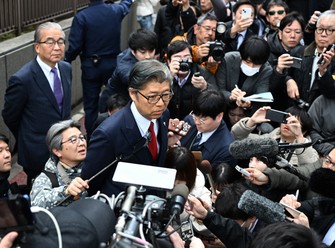
One lingering concern is that that the liquidator's authority is insufficient.
Trustees who handle bankruptcy proceedings for companies have investigative powers clearly defined by law, and companies also have an enforceable duty to cooperate.
However, the Religious Corporations Act does not clearly define the authority of liquidators. In October last year, the Agency for Cultural Affairs created guidelines for liquidation with the Unification Church in mind, including responses to potential obstruction of investigations or concealment of assets, but these are not legally binding.
In the case of AUM Shinrikyo, which had many victims, multiple legislative measures were taken to advance relief. This time, too, support from the government and the Diet is essential.
The Unification Church's assets total over 100 billion yen (around $636.28 million). A large portion of follower donations had been sent to the group's headquarters in South Korea, where the church was founded. To fully uncover the group's assets, there is room to seek cooperation from South Korean authorities, which have arrested group leader Hak Ja Han and other parties.
Political ties remain unclear
While victims themselves must file claims for relief, some hesitate out of fear of retaliation or do not realize they are victims. The guidelines set by the Agency for Cultural Affairs propose establishing a foundation to continue compensation payments, enabling support for victims who come forward after liquidation is complete. Measures need to be taken to ensure all victims receive relief.
The issue of "second-generation" family members of religious followers -- children forced to suffer under parents who became followers -- has also come to light. Further investigation and stronger consultation systems are urgently needed.
Damage from spiritual sales and other Unification Church activities has been pointed out since the 1980s. However, after mass wedding ceremonies drew attention in the 1990s, the issue faded from the spotlight. It once again came into focus in 2022, when a second-generation family member shot and killed former Prime Minister Shinzo Abe.
The government bears grave responsibility for leaving the problem unaddressed. It should review its past response and take steps to prevent a recurrence of harm, such as that stemming from large donations.
What cannot be overlooked is the fact that the group's political connections have yet to be unraveled. Many members of Japan's ruling Liberal Democratic Party (LDP) participated in events linked to the religious group or received its support in elections, effectively giving the group legitimacy. The LDP publicly released its own investigation findings in 2022, but they were insufficient.
Recently, internal documents based on reports from the Japanese corporation to the South Korean headquarters have revealed connections with Prime Minister Sanae Takaichi and other LDP lawmakers.
Even with the dissolution order, not all suspicions surrounding the group have been resolved. The LDP must clarify the facts and fulfill its accountability.
komentar
Jadi yg pertama suka

Belum Jadi Warga?
Daftar yuk!