
 Oshiete!
 Berita
  Masjid
 Info Kurs
 Media Jepang
Retro Japan: Iwakuni museum looks angular from outside, but inside, curves catch the eye
MAINICHI
| Mei 31, 2026
10 0 0
0
IWAKUNI, Yamaguchi -- This western Japan city once flourished as a castle town. Walking past its white-walled buildings, visitors come upon six angular columns. They belong to the Iwakuni Chokokan, the city's museum.
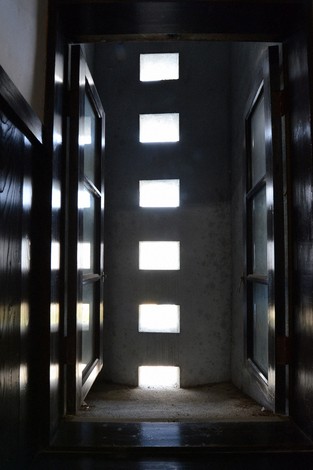
The museum was completed in the spring of 1945 and was designed by Takeo Sato (1899-1972), an architect and Waseda University professor who also worked on projects including the university's Okuma Auditorium.
The exterior has a yellowish texture that makes it look like stone, but it is in fact made of brick. That is because the surface tiles use slag, a byproduct discharged from blast furnaces during ironmaking.
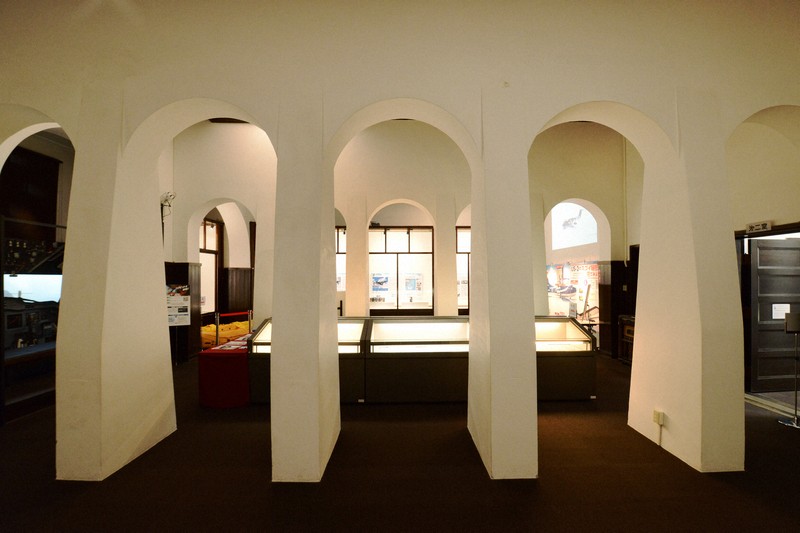
Inside the exhibition room, arches that flare outward at the base catch the eye. They were inspired by Kintaikyo Bridge, one of Iwakuni's landmarks, reportedly because Sato crossed it every day while commuting to the former Iwakuni junior high school under Japan's old education system.
The interior has a bright atmosphere, with many small square windows cut into curved walls and finished in white plaster. There is also a spiral staircase running along a rounded wall, giving the space a light feel. Because the facility was built during World War II, it appears to have been designed to let in natural light and use as little electricity as possible. It is surprising to find the dark shadow of wartime conditions here as well. In 1998, the building was registered as a national tangible cultural property.
(Japanese original by Minoru Kanazawa, Kyushu Photo and Video Department)
* * *
The Japanese version of this article was originally published on Aug. 18, 2024.
* * *
This series explores Japan's architectural wonders and secrets of yesteryear. Read more Retro Japan articles here.
komentar
Jadi yg pertama suka

Belum Jadi Warga?
Daftar yuk!