
 Oshiete!
 Berita
  Masjid
 Info Kurs
 Media Jepang
Are women-only train cars still needed in Japan? 25 years on, issue remains unsettled
MAINICHI
| 6 jam yang lalu
6 0 0
0
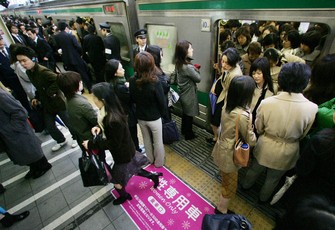
TOKYO -- A quarter of a century has passed since railway companies in Japan began introducing women-only cars in their current form. They remain an indispensable measure for preventing sexual victimization such as groping, yet they are also frequently debated from the standpoint of gender equality. So what lies at the root of the problem?
Japan's first women-only rail car appeared in Tokyo on Jan. 31, 1912, on what is now the JR Chuo Line, under the name "women-only train." It ran between Nakano Station and Shoheibashi Station, a temporary station that once stood near today's Ochanomizu Station, but it did not last long. A later "women and children only" car introduced for a time after World War II also eventually disappeared.
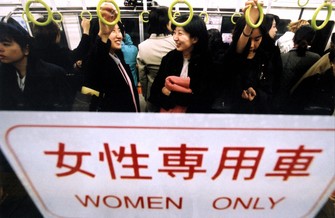
The turning point that led to today's women-only cars came in 1988, in the middle of the bubble economy. In Osaka, two men sexually assaulted a woman after holding a grudge against her for warning them about groping on a train in what became known as the "Midosuji subway case." The incident shocked society and fueled momentum for reintroducing women-only cars as a way to eradicate groping.
Keio Corp. in Tokyo first introduced the cars on a trial basis in December 2000, timed to coincide with the year-end party season, and began formal operation in March 2001. According to the Ministry of Land, Infrastructure, Transport and Tourism, as of April 2025 women-only carriages had been introduced by 31 train operators on 91 lines.
The aim, the Tokyo Metropolitan Government's Bureau of Transportation says, is "to reduce the risk of being groped and to give female passengers a sense of security." Given that groping incidents still occur in society, it is fair to say that the system serves a meaningful purpose.
At the same time, as ideas of "gender equality" have spread in recent years, some have questioned the method of physically separating train cars.

Kiriu Minashita, 56, a sociologist and professor at Kokugakuin University, points out, "I am basically in favor of it as a temporary measure, but it is something that should eventually be abolished." Through teaching students, she says she feels that "the younger the generation, the stronger the sense that men and women are already equal, and there are quite a few young men who simply see women-only cars as 'preferential treatment for women.'"
According to the results of an online survey conducted by the Cabinet Office in fiscal 2023 targeting younger people, 70% of groping cases occurred on trains or inside stations. Overall, 13.6% of women had experienced it, but 3.6% of men had as well. Minashita argues that "Japan needs to improve the train commuting environment in its urban centers, which could be described as among the harshest in the world," pointing to the need to address overcrowded trains, which can also serve as a cover for groping.
There is another reason groping has not declined. To prevent sexual harm on trains, one deterrent should be for people nearby to notice something is wrong and to speak to the individuals involved. In reality, though, the everyday scene is one in which most people are absorbed in smartphones and try not to look at those around them. In effect, the crime-prevention function of "the public gaze" is not working.
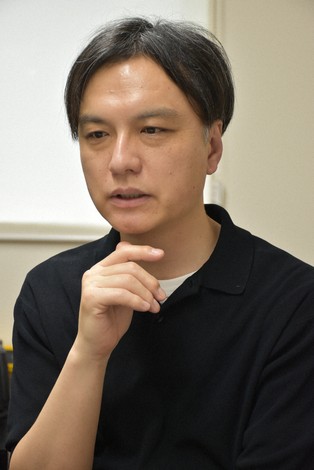
Daisuke Tanaka, 48, a sociologist and professor at Waseda University known for his book about manners on trains, said, "Even before smartphones appeared, there was already a history of 'individualization' on trains, where people tried not to interact with others."
He pointed out that people have come to focus on avoiding trouble on trains, and a shared understanding took hold that people should not get involved with one another. "If there was a culture in which passengers spoke to each other when something happened, it would be different, but that is not the reality now."
In addition, the gaze of the public's inability to reach people extends beyond groping. Minashita notes that "there are pregnant women who hesitate to wear maternity tags because they do not want to look like they are asking someone to give up a seat on a crowded train. Just as with wheelchair users and people using walking canes, maybe we also need to instill awareness that passengers pushing strollers should be helped on first."
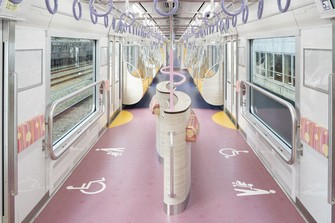
Rail operators are making efforts too. Keio introduced free-space areas in a new commuter train model brought into service in January so they can be used more easily by parents with children, wheelchair users and others. Even so, unless the current commuting style -- simply enduring tense, crowded trains -- changes, it is hard to see any real solution.
Will the day ever come when women-only cars are truly unnecessary?
(Japanese original by Ken Nakazato, Opinion Editorial Department)
komentar
Jadi yg pertama suka

Belum Jadi Warga?
Daftar yuk!