
 Oshiete!
 Berita
  Masjid
 Info Kurs
 Media Jepang
Court rejects Kyoto residents' request to halt Oi nuclear power plant
MAINICHI
| Juli 14, 2026
30 0 0
0
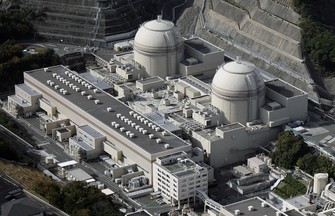
KYOTO (Kyodo) -- A district court on Tuesday rejected a request by residents of Kyoto Prefecture to halt the operation of nuclear reactors at a power plant in a neighboring area in western Japan, after they argued that an accident could cause irreparable harm to their health and livelihoods.
The Kyoto District Court ruled against the plaintiffs, who claimed adequate safety measures to address earthquake risks had not been implemented for the Nos. 3 and 4 units at Kansai Electric Power Co.'s Oi nuclear power plant in Fukui Prefecture and that evacuation plans were insufficient.
In handing down the ruling, Presiding Judge Akira Saito said that Kansai Electric's earthquake assessment and safety measures were "not illogical."
Dissatisfied with the verdict, the plaintiffs said at a press conference that they intend to appeal.
The lawsuit was first filed in November 2012, and the number of plaintiffs had increased to around 3,400.
The plaintiffs had sought damages as well as an injunction to halt operation of the Nos. 1 and 2 units, but they withdrew the latter demand in November 2019 after it was decided in 2017 to decommission the reactors.
A key point of dispute was the plaintiffs' claim that Kansai Electric had underestimated the length of a three-segment linked fault, which could generate much stronger ground shaking, and had failed to consider the possibility of intraplate earthquakes capable of producing comparable shaking.
Kansai Electric countered that it based its fault assumptions on the latest investigative methods and had taken uncertainties into account by adopting assumptions that would result in stronger shaking. It also argued that other types of earthquakes had been properly evaluated under the category of ground motions determined without specifying a particular seismic source.
The judge rejected the plaintiffs' claim, stating that it was "not based on substantial evidence."
Another major issue was the effectiveness of the resident evacuation plans, with the plaintiffs arguing there was no guarantee that transportation such as buses would be available during an emergency and roads could be damaged or closed.
The plaintiffs also said that municipal employees would have no obligation to direct evacuations in the event of potential radiation exposure, making implementation of the evacuation plans unrealistic.
Kansai Electric responded that multiple evacuation measures had been prepared, including alternative road routes as well as sea and air transportation.
As for the municipal employees, the company said they were expected to carry out their duties with appropriate health monitoring and management.
The case also raised the question of whether Japan's nuclear regulatory standards, established after the 2011 Fukushima Daiichi nuclear power plant disaster, are reasonable.
The plaintiffs argued that the standards do not adequately take crustal deformation and other geological phenomena into account, while the government said the interpretive guidance for the regulations explicitly requires consideration of the effects of crustal deformation on the ground supporting nuclear facilities.
komentar
Jadi yg pertama suka

Belum Jadi Warga?
Daftar yuk!