
 Oshiete!
 Berita
  Masjid
 Info Kurs
 Media Jepang
Japan-U.S. research team discovers substance seen as 'seed' behind Alzheimer's disease
MAINICHI
| 2 jam yang lalu
7 0 0
0
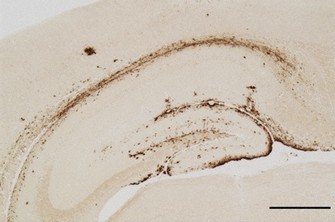
The team, including researchers from Japan's National Center of Neurology and Psychiatry, focused on the protein amyloid beta, or A-beta. In the brains of Alzheimer's disease patients, structures made of A-beta called senile plaques accumulate. These are believed to impair the function of nerve cells, leading to dementia symptoms such as memory problems. It had been confirmed that A-beta begins to accumulate in the brain about 20 years before the onset of the disease, but the substance that triggers this process had not been identified.
In their research, the team genetically modified mice to accumulate A-beta in the brain as they aged and analyzed the components making up senile plaques. As a result, three candidate substances emerged. When the researchers injected each of these substances into the hippocampus, the part of the brain that controls memory, they found that only one of them caused the amount of accumulated A-beta to surge with age.
This substance was also confirmed in the brains of six patients who died of Alzheimer's disease. When the substance taken from human patients was injected into mice, A-beta accumulation similarly began. On the other hand, it was not detected in five people who died of causes other than Alzheimer's disease.
The team identified the substance as playing a seed-like role in accumulating A-beta and named it "Peak 1 A-beta."
Lecanemab and donanemab, drugs recently covered by Japan's public health insurance system, are designed to remove senile plaques that have already accumulated. If a substance that suppresses the action of Peak 1 A-beta can be developed, it may be possible to prevent the formation of senile plaques in the first place.

Tadafumi Hashimoto, a specialist in neuropathology at the center's National Institute of Neuroscience, commented, "We want to develop methods to detect Peak 1 A-beta through blood tests, diagnostic imaging and other means, and use them for early detection and to shed light on the mechanisms by which the disease develops."
The findings were published July 20 in the British medical journal Brain Communications.
(Japanese original by Yasuyoshi Tanaka, Editorial Division)
komentar
Jadi yg pertama suka

Belum Jadi Warga?
Daftar yuk!