
 Oshiete!
 Berita
  Masjid
 Info Kurs
 Media Jepang
Japan's Imperial succession debate bypassed female emperors despite public support
MAINICHI
| Juli 22, 2026
19 0 0
0
TOKYO -- The Japanese Diet's debate ahead of revisions to the Imperial House Law did not address "female and matrilineal emperors," even though opinion polls show a majority would accept a female emperor. The Imperial system has not become a major issue in national elections, leaving the gap between Diet debate and public opinion unbridged.
A fundamental question left off the agenda
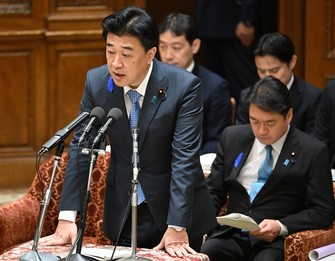
"Why is a woman unacceptable? Why insist on male-line males?" On June 10, as lower house deliberations on the revision were reaching their final stage, Chief Cabinet Secretary Minoru Kihara paused for about 45 seconds before answering the question. He struggled with a fundamental issue regarding the nature of the Imperial system.
On social media and elsewhere, comments linking Their Majesties the Emperor and Empress' eldest daughter, Princess Aiko, with Imperial succession are often seen, including, "Why can't Princess Aiko become emperor?" It is a question many people have, but it fell outside the themes of this revision.
Support existed in Meiji era
In the process of establishing the old Imperial House Law in the Meiji era (1868-1912), there was also an argument in favor of allowing female emperors. But the idea was rejected because of views that historical female emperors were "transitional figures," as well as the belief that the emergence of a matrilineal emperor would mean the severing of the "unbroken Imperial line" said to have continued from Emperor Jimmu in the deep past.
The current Imperial House Law, which inherited the old law, also limits the right of Imperial succession to male-line males. Even though the Japanese Constitution sets out the principle of equality between men and women, the government interprets "qualification to assume the Imperial Throne" as not included in basic human rights and says constitutional provisions concerning gender equality and human rights do not apply to the emperor.
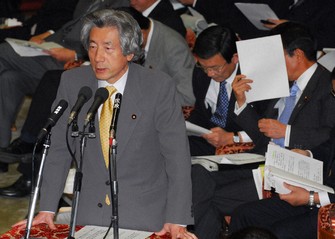
As the eras shifted from Showa (1926-1989) to Heisei (1989-2019), in 2005 a panel of experts under the then administration of Prime Minister Junichiro Koizumi compiled a report allowing female and matrilineal emperors. The circumstances behind it included the fact that no boys had been born into the Imperial Family for a long time.
But the following year, signs emerged that Princess Kiko, wife of Prince Akishino (currently Crown Princess Kiko and Crown Prince Akishino, respectively), was pregnant, and Koizumi shifted to a cautious position. "It appears the public is divided, with opinions both for and against, but I want to proceed carefully so this does not become a political football," he explained in the Diet, shelving submission of the revision bill.
Why the wariness about debate?
Resistance to matrilineal emperors remains deep-rooted, and groups such as the suprapartisan Diet members' caucus supporting Nippon Kaigi (Japan Conference) opposed the move. The government was wary of the spread of opposition campaigns, to the extent that it assigned guards to some members of the expert panel.
"The fact that the Koizumi administration could not submit a revision bill to the Diet is significant. I think it has had an impact up to the present," one government official said. Caution remains strong that fundamental reform of the form of Imperial succession could split public opinion in two.
"If we debate it, people will imagine specific individuals. That is far too harsh on the members of the Imperial Family," an Imperial Household Agency official said.
Conservative groups that have mainly supported the Liberal Democratic Party (LDP), including Nippon Kaigi and Jinja Honcho, which brings together shrines nationwide, have not yielded on the idea of maintaining succession by male-line males.
Several prefectural assemblies have also passed written opinions stating that "maintaining male-line succession is an extremely important issue related to the continuity and stability of the state," among other points, and moves insisting on male-line males remain deeply entrenched.
One veteran LDP lawmaker confided, "I can talk with supporters about the possibility of Princess Aiko becoming emperor, but I do not have the courage to appeal for that on top of a campaign van." The concern is not only consideration for conservative groups but also that clashes between incompatible principles and assertions could hinder the government and Diet operations.
Nippon Ishin (the Japan Innovation Party), the Democratic Party for the People and Sanseito, which have expanded support by highlighting their differences with the LDP, also stand with those who favor maintaining male-line succession.
Even so, various opinion polls show high support for female emperors regardless of whether respondents support ruling or opposition parties. In a Mainichi Shimbun poll conducted in May, 72% supported a woman becoming emperor, far exceeding the 10% who opposed it. A poll conducted around the same time last year showed the same trend.
Reform of the Imperial system has not become a major issue in national elections. The Imperial Family, distant from people's everyday lives, lacks the urgency of policy issues directly tied to daily life, such as measures to address rising prices or increase wages. It is believed that public views of the Imperial Family, such as accepting a female emperor, have not been linked to voting behavior.
Imperial Household Agency executive laments lack of reform
For about 80 years since it took effect, the Imperial House Law had remained almost untouched. Amid a crisis in which the thread of the Imperial line has become extremely thin, 20 years were needed from moves toward revision to realization, with many twists and turns along the way. But on the serious issue of the form of Imperial succession, the supplementary resolution only included language saying it would be "continuously considered."
"How severe a crisis must the Imperial Family fall into before social momentum builds toward the next institutional reform?" an Imperial Household Agency executive lamented.
(Japanese original by Nao Yamada, Tokyo City News Department)
komentar
Jadi yg pertama suka

Belum Jadi Warga?
Daftar yuk!