
 Oshiete!
 Berita
  Masjid
 Info Kurs
 Media Jepang
Editorial: Japan's revised retrial law fails victims of wrongful convictions
MAINICHI
| 9 jam yang lalu
4 0 0
0
Japan's revised Code of Criminal Procedure has been enacted. This is the first review of the retrial system since the post-World War II code was established. But it is hard to call this a system that sincerely confronts the suffering of victims of wrongful convictions. At this rate, it cannot fulfill its original purpose of providing swift relief.
There will now be certain rules for proceedings that examine petitions for retrial. Until now, there had been no concrete provisions, and "retrial disparities" -- differences in handling them depending on the presiding judge -- had been pointed out.
However, the effectiveness of the relief is doubtful. The first problem is that the scope of evidence disclosure could be limited. A provision has been created allowing courts to order prosecutors to submit evidence necessary for the court's own decision, but it is limited to "evidence related to the reasons for the retrial petition."
In a robbery-murder case in Shiga Prefecture in which the start of a retrial was finalized in February, photographic negative film disclosed by prosecutors in response to a court recommendation became the decisive factor.
Evidence disclosure could be narrowed
Courts will still be able, as before, to issue recommendations encouraging broad evidence disclosure at their discretion. But there is a risk that prosecutors will refuse to comply on the grounds that an order system now exists, and that the scope of disclosure will instead become narrower.
To begin with, petitioners do not know the full scope of the evidence. Despite calls in the Diet to institutionalize disclosure of evidence lists, the government stubbornly refused to comply.
Whether evidence disclosure actually moves forward will depend on how courts and prosecutors respond. Courts should take a flexible view of the scope of evidence subject to orders so that evidence is produced broadly. Prosecutors must show a sincere willingness to comply.
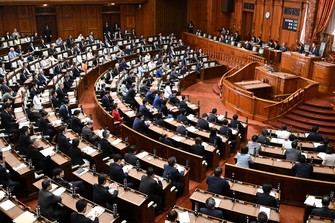
A provision that works to the disadvantage of petitioners has also been added. The use of disclosed evidence outside retrial petition procedures has been prohibited, with penalties attached.
There is a risk this will chill the activities of lawyers and others who have provided evidence to the media to convey the circumstances of retrials. Because retrial petition proceedings are conducted behind closed doors, it is highly significant that reporting sheds light on problems with investigations and other issues. This bears on the public's "right to know."
The government explained that the measure is intended to protect the privacy of those involved, but individual consideration should be enough. There is no need for a blanket ban.
It is also unacceptable that prosecutors' appeals against decisions to open retrials have been preserved. Such appeals have been criticized for prolonging proceedings and obstructing relief.
In the ruling Liberal Democratic Party (LDP)'s preliminary review ahead of Diet deliberations, such appeals were, in principle, to be prohibited. But appeals are allowed if there are "sufficient grounds." It is possible nothing will change from the way things have been.
Prosecutors bear a heavy responsibility for producing wrongful conviction cases. Nevertheless, the Ministry of Justice, where prosecutors hold key posts, was reluctant to review the retrial system. As if to head off moves by a cross-party league of Diet members that had taken the lead, the ministry hastily compiled the current revised law under its own initiative.
The league's proposal would have enabled flexible evidence disclosure and would not have allowed prosecutorial appeals. It is clear that the revised law is inferior in terms of the effectiveness of relief for victims.
No sign of reflection from prosecutorsf
Prosecutors' insincere attitude was laid bare even during Diet deliberations on the revised law.
In the case of the killing of a junior high school girl in the city of Fukui, the investigative report that proved decisive in acquitting Shoji Maekawa in a retrial had been submitted by police to prosecutors at the first-trial stage. Although multiple prosecutors were aware of its existence, they continued to argue for his guilt in the trial and in the retrial request hearings. The report was disclosed to Maekawa's side 19 years after the first retrial petition.
The Supreme Public Prosecutors Office issued a comment saying, "We sincerely reflect on having caused public distrust toward prosecutors." But shouldn't the first person they bow their heads to be Maekawa? There is no sign of reflection on having ruined his life through a wrongful conviction. Prosecutors should recognize their responsibility as "representatives of the public interest."
The trigger for the review of the retrial system was the wrongful conviction case of Iwao Hakamada. After his death sentence became final, it took 43 years from his first retrial petition to his acquittal in a retrial, and his long detention gnawed away at his mind and body.
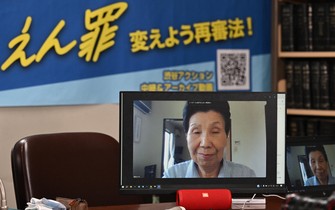
After the revised law was enacted, his sister, Hideko Hakamada, said, with a sense of bitterness, "I thought the revision would be a little more proper, but I am disappointed." It is necessary to take seriously the fact that the law has failed to answer the feelings of victims of wrongful convictions and others. The Diet, which passed the revised law, cannot escape responsibility, either.
The supplementary provisions of the revised law include a clause requiring the state of the system to be reviewed every five years after the law takes effect. Retrials are the "last bastion" of human rights relief. The system should be reviewed without waiting five years.
komentar
Jadi yg pertama suka

Belum Jadi Warga?
Daftar yuk!